BPCL offtake agreement signed
Bharat Petroleum will buy CBG from our Raebareli plant.
Compressed Bio Gas · Uttar Pradesh
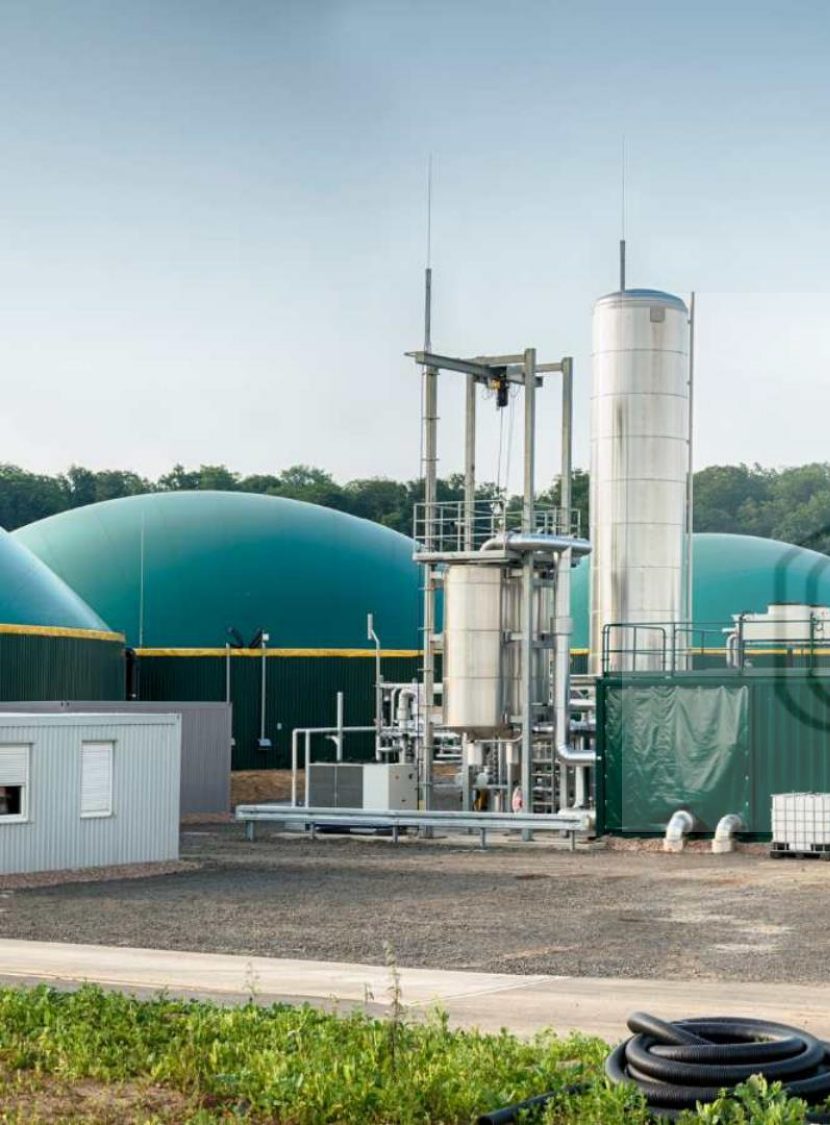
Panchvati Foods builds and runs compressed biogas (CBG) plants that turn sugar-mill pressmud and cattle dung into vehicle-grade bio-CNG, organic manure and biomass pellets. Nothing goes to waste, and every by-product returns to the farm.
Latest milestones
Bharat Petroleum will buy CBG from our Raebareli plant.
GAIL (India) Ltd. agrees terms to purchase our biogas and CBG for city gas.
Hardoi, Sitapur and Ayodhya: together 23.5 TPD of CBG.
Muzaffarnagar, Lakhimpur Kheri and Pilibhit: a further 23.5 TPD.
Who we are
Bio-CNG is a renewable alternative to fossil CNG. It is made by letting bacteria digest organic waste without oxygen, then cleaning and compressing the biogas they produce.
Uttar Pradesh is the right place to do it at scale: India's largest sugarcane state, with a huge cattle herd and millions of tonnes of crop residue every year. Today much of this is dumped or burnt.
Panchvati Foods captures that value. We design, build and operate CBG plants, sell the gas to India's leading oil companies, and return the leftover nutrients to farmers as organic manure.
The problem we solve
Rotting agricultural and industrial waste releases methane, a greenhouse gas far stronger than CO₂. We capture it and use it.
Organic waste piles up at mills, dairies and in fields. We turn it into a valuable energy resource instead of landfill.
India imports most of its gas and oil. Renewable bio-CNG makes the energy mix cleaner and more secure.
Decentralised plants bring energy, jobs and a new income to rural and remote communities.
Why bio-CNG
Made from organic waste, bio-CNG adds no net carbon compared with fossil fuels.
Crop residue, dung and pressmud are produced again every season, so the fuel never runs out.
Burning bio-CNG emits far less particulate matter, nitrogen oxides and sulphur oxides than diesel or petrol.
Diverting organic waste from dumps and fields reduces pollution and stubble burning.
Our objectives
Capture methane from farm and mill waste before it reaches the air.
Make organic waste a resource instead of landfill or smoke.
Supply renewable bio-CNG and cut India's fuel imports.
Bring energy, jobs and income to villages around each plant.
Return organic carbon to farmland through our manure.
How it works
Pressmud from sugar mills and dung from local cattle arrive at the plant every day.
Sealed, oxygen-free digesters let bacteria turn the slurry into raw biogas.
A three-stage membrane system strips out CO₂ and impurities to leave pure methane.
The gas is compressed to 250 bar and delivered to CNG outlets as bio-CNG.
Why Uttar Pradesh
Uttar Pradesh produces enormous volumes of organic waste every year, and demand for gas in the state keeps rising across every sector.
Million metric tonnes per year
Source: TERI, "Assessment of Biomass Energy Potential and Identification of Potential Clusters" (2018).
Million tonnes, 2018–2022. Hover for values.
Source: Uttar Pradesh Pollution Control Board, as cited in the company presentation.
Offtake partners
Purchase of biogas / CBG for city gas distribution.
Term sheet · 6 March 2025Offtake of CBG from our Raebareli plant.
Agreement · 19 May 2025Long-term purchase of CBG at prevailing CNG rates.
Executed · September 2022Our vision
Bio-CNG can reduce India's dependence on fossil fuels, lower carbon emissions and put circular-economy principles into practice.
Capturing methane from agricultural and municipal waste directly supports India's climate goals.
Each plant creates jobs, new income for farmers and mills, and reduces India's energy import bill.
Government incentives and frameworks such as SATAT are speeding up the adoption of bio-CNG.
Ongoing research keeps improving the efficiency and cost of producing and using bio-CNG.
Future roadmap
Invest in new bio-CNG plants at strategic locations to meet growing demand for renewable gas.
Keep upgrading our plants with the latest processing technology for better yields and gas quality.
Partner with agricultural, municipal and industrial waste suppliers for a reliable supply.
Take bio-CNG beyond vehicles into power generation, heating and industrial processes.
Work with industry, research institutions and government to speed up bio-CNG adoption.
Sugar mills, dairies, gaushalas and farmer groups: turn your waste into a steady income.
Become a supplierEngineers, plant operators and field teams: send us your CV for roles across our clusters.
Apply now